
Patient education
Radiation therapy (IMRT) for prostate cancer
Intensity-modulated radiation therapy (IMRT) is a precise, non-surgical way to treat prostate cancer. Here is how it compares with surgery and surveillance, and what to expect.
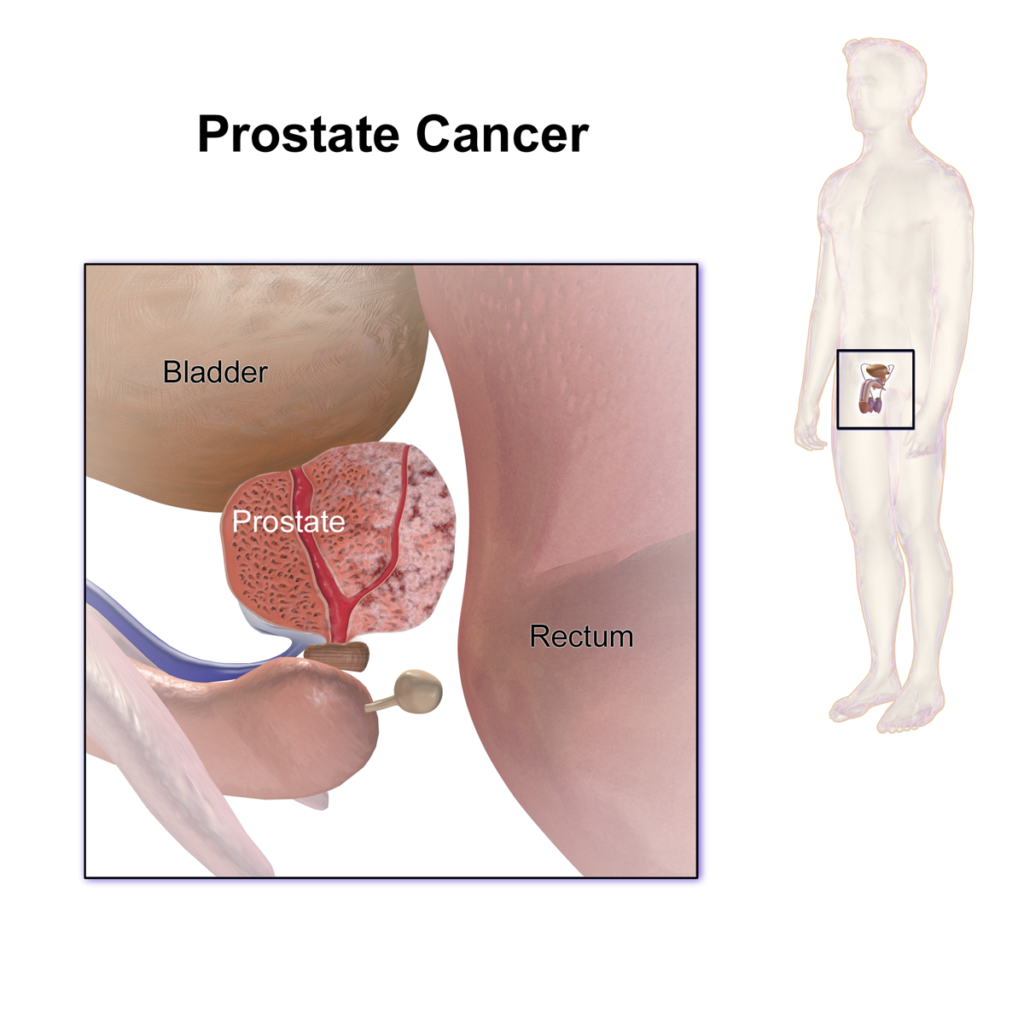
Illustration: BruceBlaus, CC BY-SA 4.0, via Wikimedia Commons
Course of treatment
Several weeks, often up to ~8
Each session
A few minutes, painless
Anesthesia
None needed
Your team
Dr. Pooli + radiation oncologist
Your treatment options
For prostate cancer that has not spread, the main options are active surveillance, radical prostatectomy, and radiation therapy. The right choice depends on your cancer’s risk group, your life expectancy and overall health, the balance of cancer control and quality of life, and your own preferences.
For most tumors, surgery and radiation offer similar long-term cancer control; they differ mainly in how treatment is delivered and in their side effects. Dr. Pooli reviews each option with you and can arrange a consultation with a radiation oncologist.
How IMRT works
A machine called a linear accelerator delivers high-energy X-ray beams shaped to the exact 3-D form of the prostate. The intensity of each beam is adjusted, so the prostate receives a high dose while the bladder and rectum nearby receive much less.
Treatment is given in a series of short daily sessions over several weeks. You lie still on a table for a few minutes; you will not feel the radiation, and you are not radioactive afterward.
Getting ready
- A planning CT or MRI scan maps the prostate and nearby organs.
- Small gold markers may be placed in the prostate to help aim each treatment precisely.
- Dr. Pooli offers SpaceOAR™ hydrogel, a soft gel placed between the prostate and rectum to move the rectum away from the radiation and lower the risk of bowel side effects.
- Hormone therapy (androgen deprivation) is sometimes added for higher-risk cancers.
Possible side effects
- Urinary: frequency, urgency or burning during and shortly after treatment
- Bowel: looser or more frequent stools, urgency, and occasionally a little rectal bleeding
- Fatigue toward the end of treatment
- Erections: changes may develop gradually over months to years
- Serious long-term bladder or bowel problems are uncommon
Unlike surgery, radiation avoids the immediate risks of an operation and does not need a catheter.
Other approaches
Brachytherapy places tiny radioactive seeds directly in the prostate during a short procedure under anesthesia. It works well for lower-risk cancers and can be combined with external radiation and hormone therapy for higher-risk disease.
Active surveillance — regular PSA tests, exams, MRI and periodic biopsies — is a safe choice for many men with low-risk, and some with favorable intermediate-risk, cancer.
If cancer returns after surgery, radiation can still be used; after radiation, further options include hormone therapy and, in selected cases, other local treatments.
When to call us
- Blood in the urine or stool that is more than a small amount
- Unable to urinate
- Fever, or burning that keeps getting worse
- Severe diarrhea or abdominal pain
Call (424) 529-6755. For chest pain, trouble breathing, fainting or other emergencies, call 911.
This page is general education and is not a substitute for medical advice. Your evaluation and treatment plan will be personalized at your visit.
Ready to talk with Dr. Pooli?
New patients, second opinions, concierge and out-of-network PPO patients are welcome.