
Patient education
Blood in the urine (hematuria)
Blood in the urine is common and often has a simple cause — but it should always be checked, because it can also be the first sign of a kidney or bladder problem.
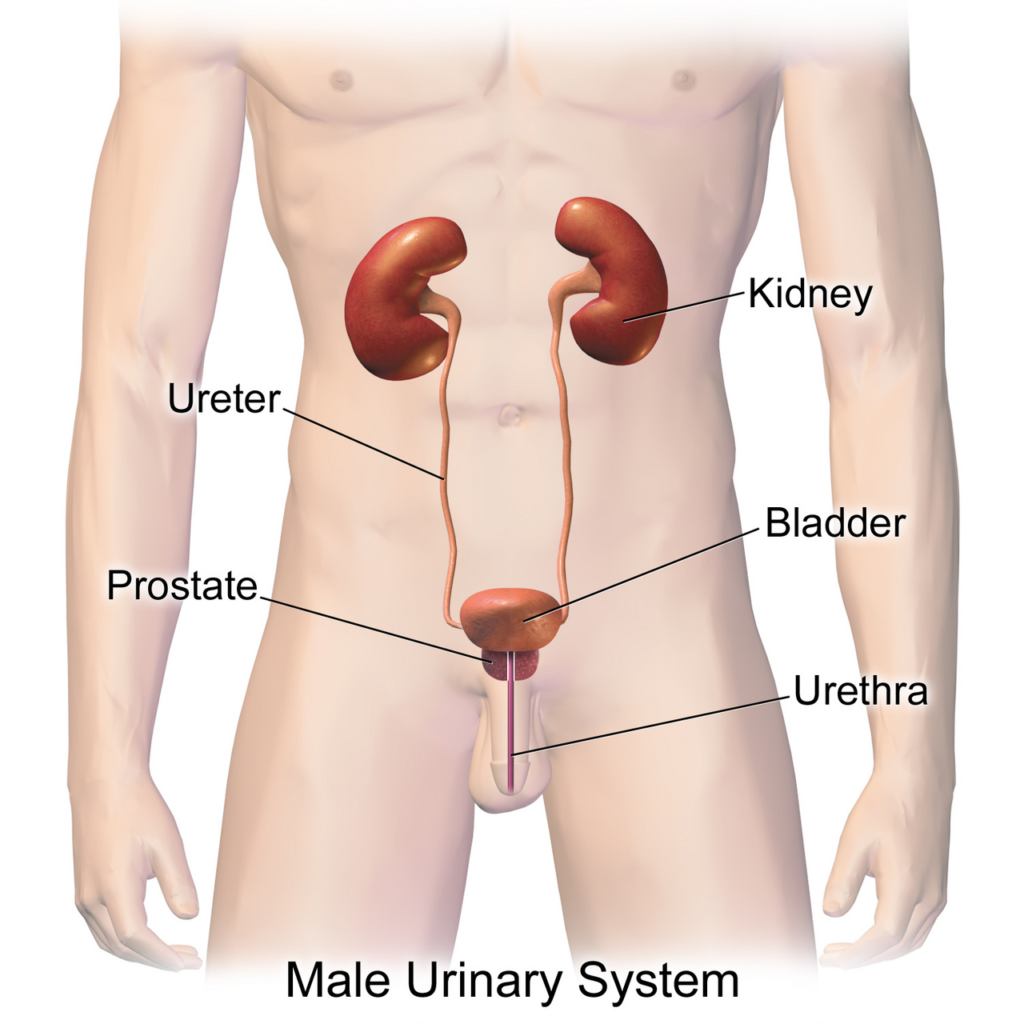
Illustration: BruceBlaus, CC BY-SA 4.0, via Wikimedia Commons
Visible (gross) hematuria
Pink, red or cola-colored urine
Microscopic hematuria
Found only on a urine test
Usual evaluation
Urine tests, imaging, cystoscopy
Two kinds of hematuria
Visible (gross) hematuria means you can see the blood — urine may look pink, red or brown, sometimes with clots. Microscopic hematuria means the urine looks normal, but blood cells are seen under the microscope on a routine urine test.
Even a single episode of visible blood, especially without pain, deserves an evaluation.
Common causes
- Urinary tract or prostate infection
- Kidney or bladder stones
- An enlarged prostate (BPH)
- Injury, or vigorous exercise
- Kidney conditions that affect the filters (glomeruli)
- Blood thinners — these can make bleeding more likely, but rarely cause it on their own
- Tumors of the bladder, kidney or ureter — less common, but important to rule out, especially in smokers and people over 50
Menstrual bleeding or certain foods and medicines (such as beets or rifampin) can change urine color without true hematuria.
How it is evaluated
The evaluation depends on your age, smoking history, the amount of blood and other risk factors, following American Urological Association guidance:
- Urine tests to confirm blood, check for infection and look for abnormal cells
- Blood tests for kidney function
- Imaging of the kidneys and ureters — usually a CT urogram or an ultrasound
- Cystoscopy — a quick office look inside the bladder with a thin camera
In many people no serious cause is found. When a problem is found early, it is usually easier to treat.
Lowering your risk
Stopping smoking is the single most important step — smoking is the leading risk factor for bladder cancer. Staying well hydrated also helps prevent infections and stones.
When to call us
- Large clots, or you cannot urinate
- Fever, chills or flank pain with blood in the urine
- Dizziness, weakness or fainting — call 911
- Bleeding while on a blood thinner that does not settle
Call (424) 529-6755. For chest pain, trouble breathing, fainting or other emergencies, call 911.
This page is general education and is not a substitute for medical advice. Your evaluation and treatment plan will be personalized at your visit.
Ready to talk with Dr. Pooli?
New patients, second opinions, concierge and out-of-network PPO patients are welcome.