
Robotic surgery guide
Robotic sacrocolpopexy
A durable repair for pelvic organ prolapse: soft surgical mesh lifts and supports the top of the vagina from a strong ligament on the sacrum — with or without hysterectomy.
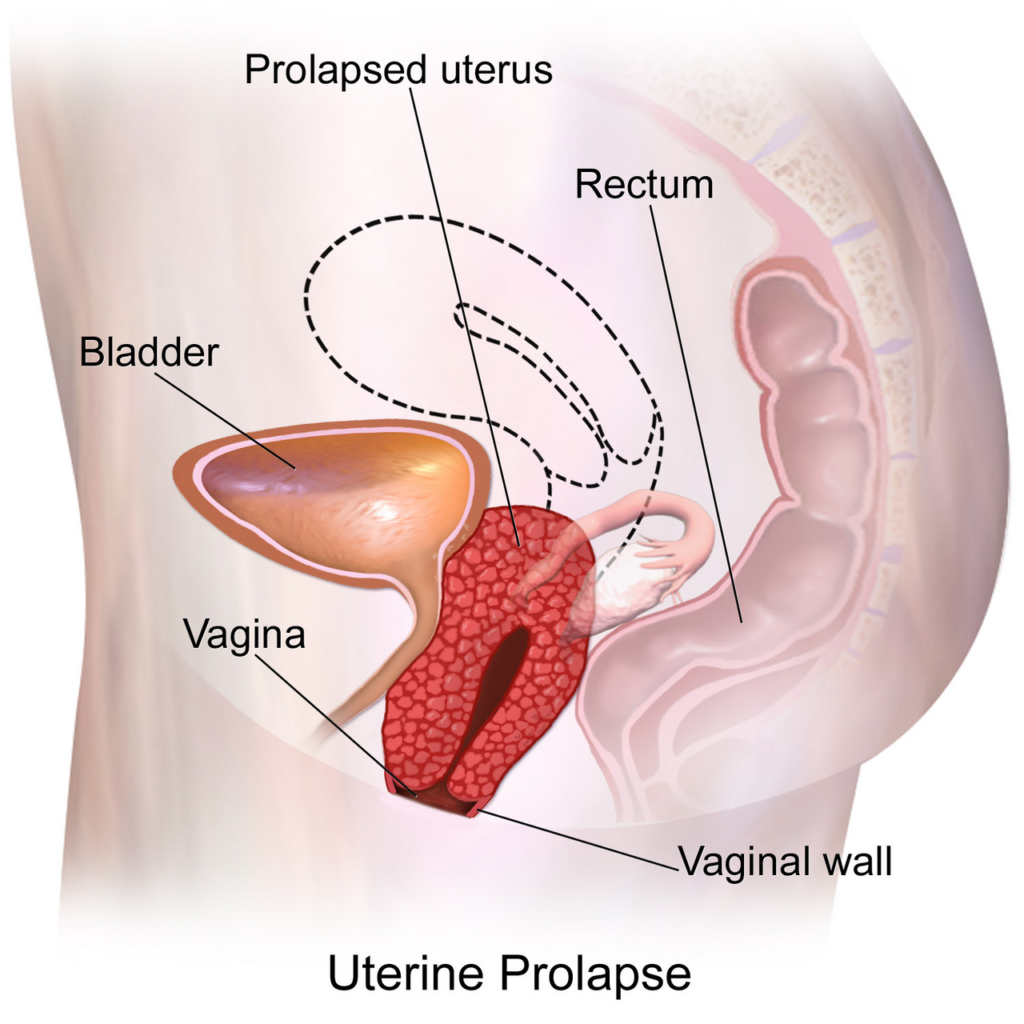
Illustration: BruceBlaus, CC BY-SA 4.0, via Wikimedia Commons
Surgery time
About 2–4 hours
Hospital stay
Same day to 1 night
Catheter
Usually removed before going home
No lifting or intercourse
About 6 weeks
Typical ranges for most patients. Your own plan may differ — Dr. Pooli will review what to expect with you.
Who it’s for
Women with bothersome prolapse of the vaginal vault, uterus, bladder or rectum — a feeling of bulging or pressure, difficulty emptying the bladder or bowel, or discomfort — especially when the top (apex) of the vagina has dropped. It is a good option for active women who want a long-lasting repair, including after a prior hysterectomy.
Pessaries and pelvic floor therapy are non-surgical alternatives we will also discuss.
How it works
Through small abdominal incisions, a Y-shaped piece of lightweight mesh is attached to the front and back walls of the vagina and anchored to the sacral promontory, restoring normal support. If the uterus is present, a hysterectomy may be performed at the same time, or the uterus may be preserved in selected cases.
If you also have stress urinary leakage, a mid-urethral sling can be placed during the same anesthesia.
What to expect
Before, during and after surgery
Step 1
Before surgery
- Pelvic exam, bladder testing and up-to-date Pap and cervical screening
- Stop smoking — it raises the risk of mesh problems
- Stop blood thinners as instructed
- Bowel preparation if advised; nothing to eat or drink after midnight
Step 2
During surgery
- General anesthesia
- 4–5 small incisions
- Mesh attached to the vagina and anchored to the sacrum
- Hysterectomy and/or sling if planned
Step 3
After surgery
- Walking the same day; many go home the same day or next morning
- Mild vaginal spotting and discharge are normal
- Avoid constipation with fluids, fiber and stool softeners
- No heavy lifting, straining or intercourse for about 6 weeks
- Follow-up pelvic exam at about 6 weeks
Possible risks
Robotic surgery is generally safe, and serious problems are uncommon. As with any operation, risks can include:
- Mesh exposure into the vagina (uncommon) that may need treatment
- Bladder, bowel or ureter injury (rare)
- Infection or bleeding
- New or worsened urinary leakage
- Constipation or pain with intercourse
- Prolapse returning in another area
When to call us
- Fever of 100.4°F (38°C) or higher
- Heavy vaginal bleeding or foul-smelling discharge
- Unable to urinate
- Worsening belly pain or vomiting
- Any other symptom that worries you
Call (424) 529-6755. For chest pain, trouble breathing or other emergencies, call 911.
This page is general education and is not a substitute for medical advice. Every patient is different; your surgical plan, recovery timeline and instructions will be personalized at your consultation.
Ready to talk with Dr. Pooli?
New patients, second opinions, concierge and out-of-network PPO patients are welcome.