
Robotic surgery guide
Robotic lymph node dissection
Removal of lymph nodes in the back of the abdomen (retroperitoneal) or the pelvis to treat cancer or find out whether it has spread.
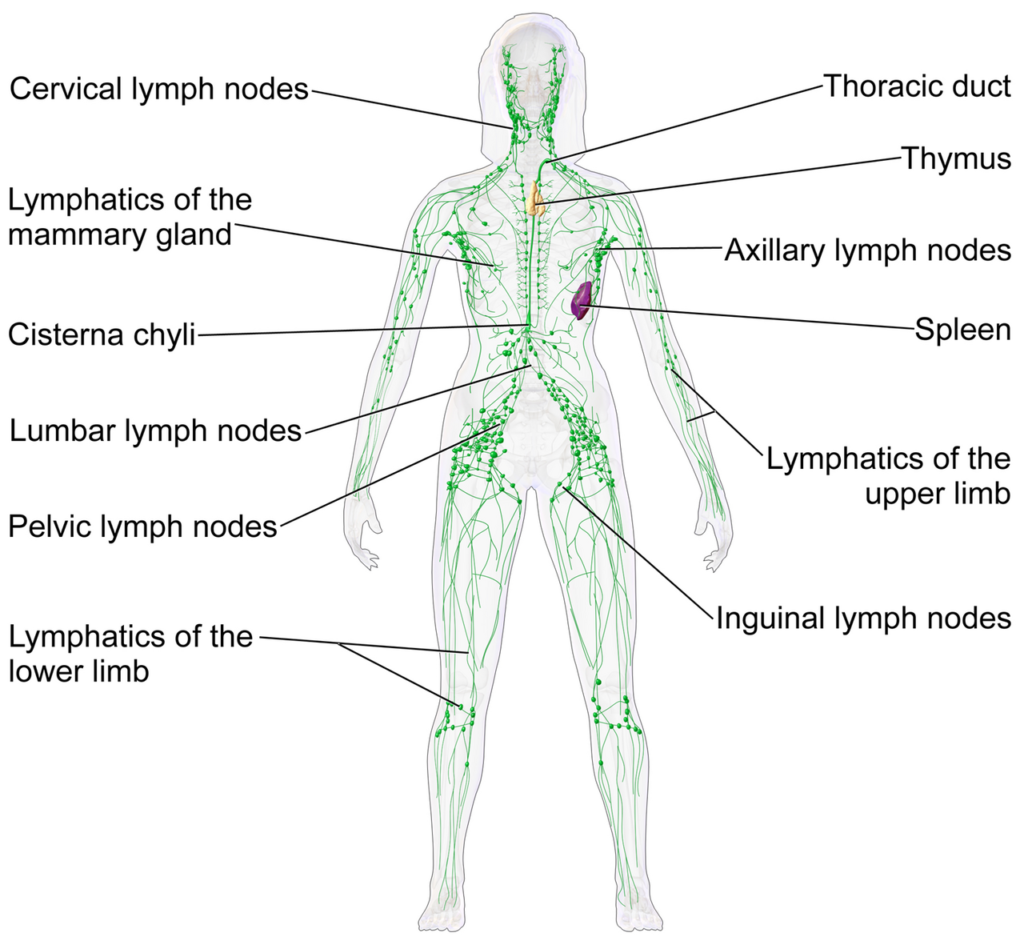
Illustration: BruceBlaus, CC BY 3.0, via Wikimedia Commons
Surgery time
About 2–5 hours
Hospital stay
Usually 1–2 nights
Special diet
Low-fat diet for ~2–4 weeks if advised
Back to desk work
Usually 2–3 weeks
Typical ranges for most patients. Your own plan may differ — Dr. Pooli will review what to expect with you.
Who it’s for
Retroperitoneal lymph node dissection (RPLND) is used mainly for testicular cancer — to remove lymph nodes that may contain cancer in early-stage disease, or masses that remain after chemotherapy.
Pelvic lymph node dissection is usually done together with radical prostatectomy or cystectomy to stage prostate or bladder cancer, and sometimes on its own when cancer returns in pelvic nodes.
How it works
The lymph nodes and surrounding fatty tissue along the aorta and vena cava (for RPLND) or along the pelvic blood vessels are carefully removed and sent to the pathologist.
For RPLND, Dr. Pooli uses a nerve-sparing technique whenever possible to protect the nerves responsible for ejaculation. The robotic approach typically means less pain and a faster recovery than open surgery.
What to expect
Before, during and after surgery
Step 1
Before surgery
- Up-to-date CT scans and tumor marker blood tests (for testicular cancer)
- Sperm banking may be discussed before RPLND
- Stop blood thinners as instructed
- Nothing to eat or drink after midnight unless told otherwise
Step 2
During surgery
- General anesthesia
- 4–6 small incisions
- Lymph nodes removed along the major blood vessels
- Nerves protected where possible
Step 3
After surgery
- Walking the same day or next morning
- A low-fat diet for a few weeks may be advised after RPLND to prevent lymph fluid leakage
- No heavy lifting for about 4–6 weeks
- Pathology results guide whether further treatment or surveillance is needed
Possible risks
Robotic surgery is generally safe, and serious problems are uncommon. As with any operation, risks can include:
- Lymph fluid collection or leak (lymphocele or chylous ascites)
- Bleeding or injury to major blood vessels (rare)
- Infection
- Slow return of bowel function
- Dry orgasm (retrograde ejaculation) after RPLND
- Leg swelling after pelvic node removal
When to call us
- Fever of 100.4°F (38°C) or higher
- Increasing belly swelling or a feeling of fullness
- Swelling or pain in a leg
- Vomiting or inability to eat
- Any other symptom that worries you
Call (424) 529-6755. For chest pain, trouble breathing or other emergencies, call 911.
This page is general education and is not a substitute for medical advice. Every patient is different; your surgical plan, recovery timeline and instructions will be personalized at your consultation.
Ready to talk with Dr. Pooli?
New patients, second opinions, concierge and out-of-network PPO patients are welcome.