
Robotic surgery guide
Robotic ureteral reimplantation
Reconnecting the ureter — the tube that carries urine from the kidney — to a new, healthy spot on the bladder (ureteroneocystostomy).
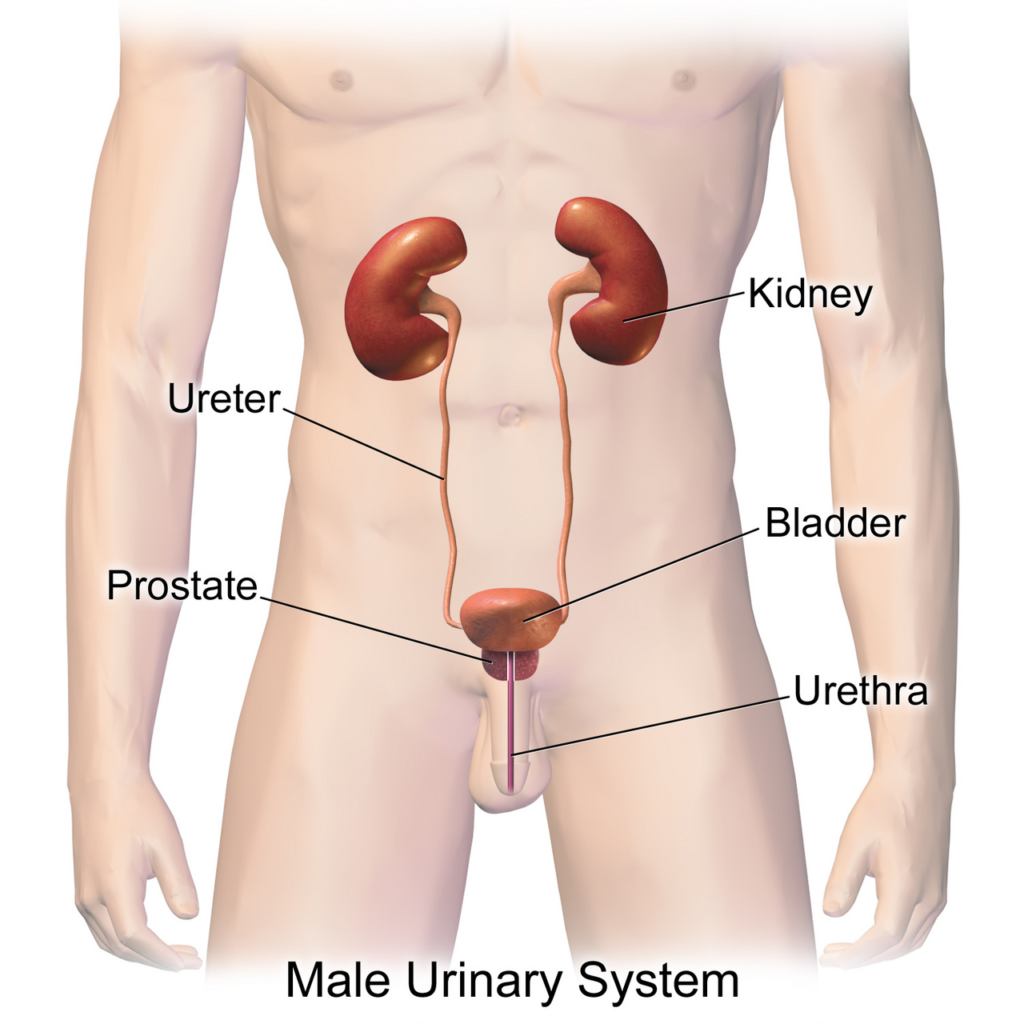
Illustration: BruceBlaus, CC BY-SA 4.0, via Wikimedia Commons
Surgery time
About 2–4 hours
Hospital stay
Usually 1–2 nights
Catheter / stent
Catheter ~7–10 days; stent ~4–6 weeks
Back to desk work
Usually 2–3 weeks
Typical ranges for most patients. Your own plan may differ — Dr. Pooli will review what to expect with you.
Who it’s for
Patients with a narrowing (stricture) or injury of the lower ureter near the bladder, urine backing up from the bladder to the kidney (reflux), a ureter blocked by scar tissue after surgery or radiation, or selected low-grade tumors of the lower ureter.
It is also performed together with bladder diverticulectomy when the ureter enters the bladder at the pouch.
How it works
The diseased lower end of the ureter is removed, and the healthy ureter is tunneled into the bladder and stitched in place. If extra length is needed, the bladder can be lifted and anchored (a “psoas hitch”) to make a tension-free connection.
A stent supports the new connection while it heals, and a catheter drains the bladder for the first week or so.
What to expect
Before, during and after surgery
Step 1
Before surgery
- CT or MRI urogram, and sometimes a scope exam of the ureter
- Urine test to treat any infection first
- Stop blood thinners as instructed
- Nothing to eat or drink after midnight unless told otherwise
Step 2
During surgery
- General anesthesia
- 4–6 small incisions
- Narrowed or diseased segment removed
- Ureter reconnected to the bladder over a stent
Step 3
After surgery
- Walking the same day
- Bladder spasms and some blood in the urine are common at first
- Catheter removed in about 7–10 days, sometimes after a leak test
- Stent removed in the office in about 4–6 weeks
- Imaging a few months later to confirm good drainage
Possible risks
Robotic surgery is generally safe, and serious problems are uncommon. As with any operation, risks can include:
- Urine leak at the new connection
- Infection
- Bleeding
- Narrowing of the new connection
- Reflux of urine toward the kidney
- Bladder spasms and stent discomfort
When to call us
- Fever of 100.4°F (38°C) or higher
- Catheter not draining
- Severe flank or belly pain
- Heavy bleeding or clots in the urine
- Any other symptom that worries you
Call (424) 529-6755. For chest pain, trouble breathing or other emergencies, call 911.
This page is general education and is not a substitute for medical advice. Every patient is different; your surgical plan, recovery timeline and instructions will be personalized at your consultation.
Ready to talk with Dr. Pooli?
New patients, second opinions, concierge and out-of-network PPO patients are welcome.