
Robotic surgery guide
Robotic partial nephrectomy
Kidney-sparing surgery that removes only the tumor and a small rim of healthy tissue, preserving as much kidney function as possible.
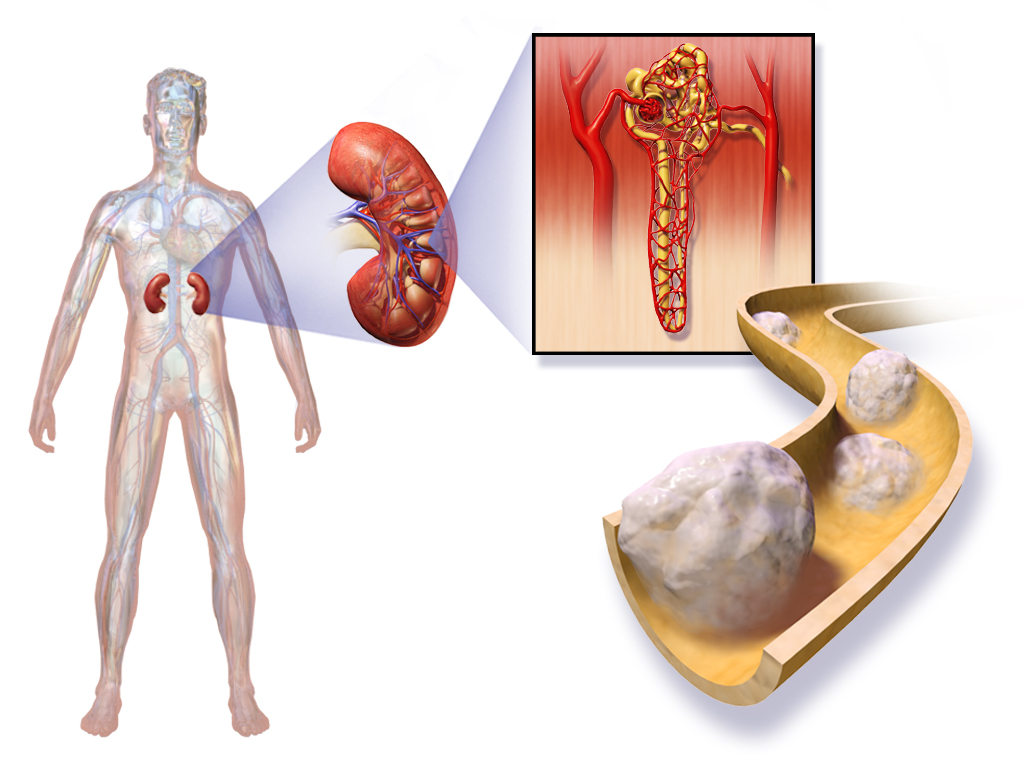
Illustration: BruceBlaus, CC BY-SA 4.0, via Wikimedia Commons
Surgery time
About 2–4 hours
Hospital stay
Usually 1–2 nights
Drain or catheter
Usually 1–2 days
Back to desk work
Usually 2–4 weeks
Typical ranges for most patients. Your own plan may differ — Dr. Pooli will review what to expect with you.
Who it’s for
Patients with a kidney tumor — most often a small renal mass found on a CT or MRI — where removing only part of the kidney can control the cancer. It may also be recommended for larger tumors when someone has only one kidney, tumors in both kidneys, or reduced kidney function.
Dr. Pooli will also discuss alternatives such as active surveillance of small masses, ablation, or removal of the whole kidney.
How it works
The blood flow to the kidney may be briefly paused while the tumor is cut out with a margin of normal tissue. The kidney is then repaired with stitches, and blood flow is restored.
The robot’s magnified 3-D view and wristed instruments make precise removal and reconstruction possible through small incisions. The tissue is examined by a pathologist to confirm the diagnosis and margins.
What to expect
Before, during and after surgery
Step 1
Before surgery
- Review of your CT or MRI and kidney function blood tests
- Medical clearance if needed
- Stop blood thinners and supplements only as instructed
- Nothing to eat or drink after midnight unless told otherwise
Step 2
During surgery
- General anesthesia, lying on your side
- 4–6 small incisions on the abdomen and flank
- Tumor removed and kidney repaired
- A small drain may be placed
Step 3
After surgery
- Walking the same day or next morning
- Mild flank and shoulder-tip pain is common for a few days
- Drain and catheter usually removed before discharge
- No heavy lifting for about 4–6 weeks
- Pathology review at follow-up; imaging surveillance afterward
Possible risks
Robotic surgery is generally safe, and serious problems are uncommon. As with any operation, risks can include:
- Bleeding, including delayed bleeding days to weeks later
- Urine leak from the repaired kidney
- Infection
- Injury to nearby organs or blood vessels
- Change to removing the whole kidney, or to open surgery
- A temporary or lasting decrease in kidney function
- Tumor at the edge of the removed tissue or return of cancer
When to call us
- Fever of 100.4°F (38°C) or higher
- Blood in the urine that does not clear, or new flank pain
- Dizziness or fainting
- Worsening belly swelling or pain
- Any other symptom that worries you
Call (424) 529-6755. For chest pain, trouble breathing or other emergencies, call 911.
This page is general education and is not a substitute for medical advice. Every patient is different; your surgical plan, recovery timeline and instructions will be personalized at your consultation.
Ready to talk with Dr. Pooli?
New patients, second opinions, concierge and out-of-network PPO patients are welcome.