
Robotic surgery guide
Robotic simple prostatectomy
For a very large, non-cancerous enlarged prostate (BPH): the inner tissue that blocks urine flow is removed robotically, leaving the outer prostate in place.
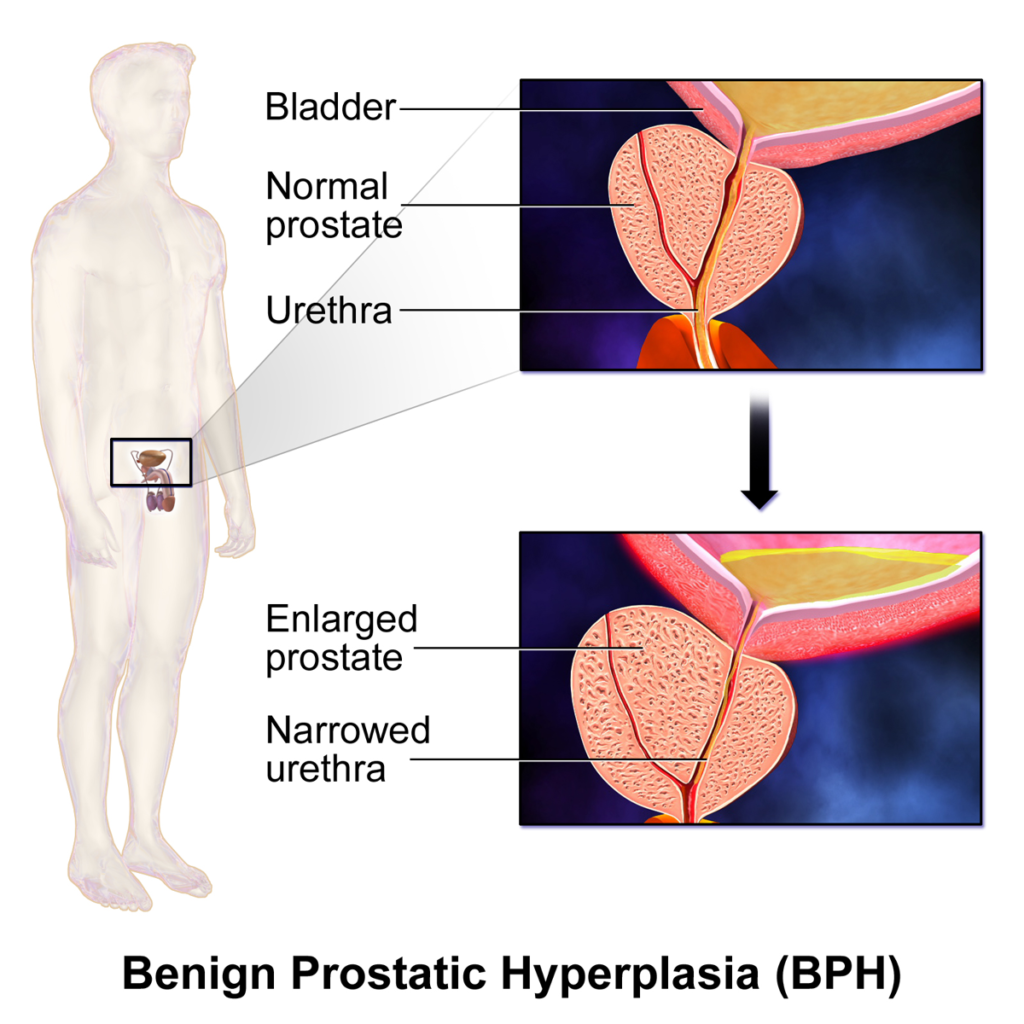
Illustration: BruceBlaus, CC BY-SA 4.0, via Wikimedia Commons
Surgery time
About 2–4 hours
Hospital stay
Usually 1–2 nights
Urinary catheter
About 5–10 days
Back to light activity
Usually 2–3 weeks
Typical ranges for most patients. Your own plan may differ — Dr. Pooli will review what to expect with you.
Who it’s for
Men whose prostate is too large for TURP, GreenLight laser, Rezum or UroLift to work well, and who have bothersome urinary symptoms, difficulty emptying the bladder, retention, recurrent infections, bleeding or bladder stones despite medication.
Dr. Pooli selects the right procedure for each patient based on symptom score, prostate size and shape, and bladder function.
How it works
Through small abdominal incisions, the obstructing inner part of the prostate (the adenoma) is shelled out, much like removing the pulp from an orange while leaving the peel. The outer capsule and the sphincter muscles that control urine are preserved.
This is surgery for benign enlargement — it is different from the radical prostatectomy used for cancer.
What to expect
Before, during and after surgery
Step 1
Before surgery
- Evaluation may include a prostate ultrasound or MRI, bladder testing and a PSA
- Stop blood thinners and supplements only as instructed
- Treat any urinary infection beforehand
- Nothing to eat or drink after midnight unless told otherwise
Step 2
During surgery
- General anesthesia
- 5–6 small keyhole incisions
- Inner prostate tissue removed through the bladder or prostate capsule
- Catheter placed to let the area heal
Step 3
After surgery
- Walking the same day
- Some blood in the urine is common at first
- Catheter removed in clinic after about 5–10 days
- Urgency and frequency often improve over weeks as the bladder recovers
- No heavy lifting or straining for about 4–6 weeks
Possible risks
Robotic surgery is generally safe, and serious problems are uncommon. As with any operation, risks can include:
- Bleeding, occasionally needing a transfusion
- Infection
- Temporary urgency or leakage
- Dry orgasm (retrograde ejaculation), which is common
- Scar tissue narrowing the bladder outlet
- Blood clots in the legs or lungs
When to call us
- Fever of 100.4°F (38°C) or higher
- Catheter not draining
- Heavy bleeding or large clots in the urine
- Swelling or pain in a leg
- Any other symptom that worries you
Call (424) 529-6755. For chest pain, trouble breathing or other emergencies, call 911.
This page is general education and is not a substitute for medical advice. Every patient is different; your surgical plan, recovery timeline and instructions will be personalized at your consultation.
Ready to talk with Dr. Pooli?
New patients, second opinions, concierge and out-of-network PPO patients are welcome.